


How to Trade Cryptocurrency: A Beginner's Guide to Buying and Selling Digital Assets
Key Takeaways
- Learning how to trade cryptocurrency starts with a clear plan. Use the SMART framework to set your goals before you put any money at risk.
- Safety comes first. That means selecting a secure platform, enabling two-factor authentication (2FA), and never trading with money you can't afford to lose.
So, you're ready to get into crypto trading. It's an exciting thought, but let's be real: it can also feel like a total maze. But that's normal.
This guide walks you through a clear, step-by-step roadmap to show how to trade cryptocurrency the right way. This isn't about getting rich overnight. It's about learning to buy & sell cryptos with a strategy and confidence.
Are You in a Hurry? Here's your 3-Step Quick Start on How to Trade Cryptocurrency
- Get a Trusted Platform: Choose a secure, beginner-friendly Crypto Trading Platform.
- Fund Your Account: Link your bank or card to deposit funds securely.
- Make Your First Trade: Start small. Buy a little Bitcoin (BTC) or Ethereum (ETH) just to get the hang of it.
The Foundation: Setting Your SMART Trading Goals
The first and most important rule is to know what you're aiming for. If you don't have a plan, you're not trading; you're gambling. It's that simple.
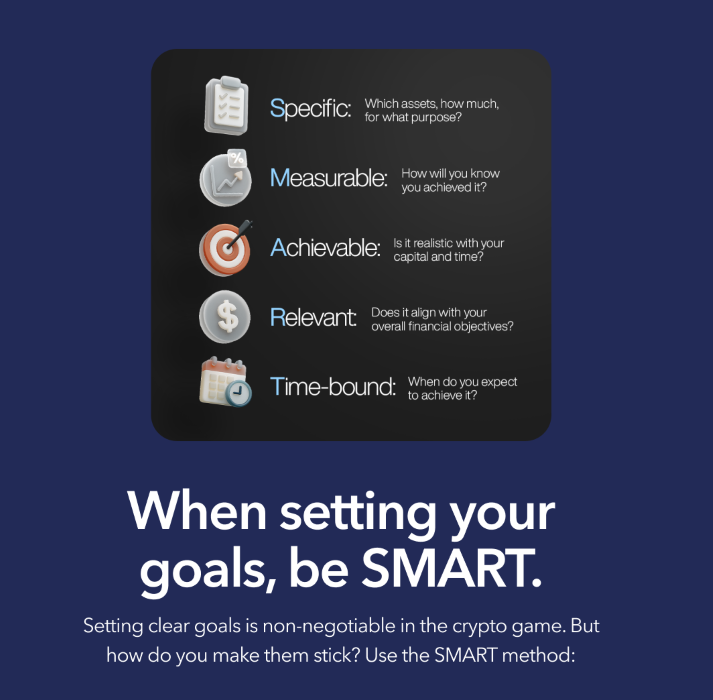
Let's break it down using the SMART framework.
Specific: It means defining exactly what you're aiming for. Maybe you want to buy $200 of Ethereum and sell after a 10% gain. That's a specific action with a measurable outcome.
Measurable: lets you track success. You'll know if you hit your 10% gain or not. If your target is "just make profit," there's nothing to measure.
Achievable: keeps your expectations in check. Can you really hit 25% monthly growth starting from zero capital and zero experience? Probably not. Aim for something you can actually reach.
Relevant: It connects the trade to your broader life goals. If you're saving for a house, does a high-risk meme coin really fit that plan?
Time-bound: It gives you a deadline. Otherwise, you'll hold forever, waiting for some imaginary peak.
How to Trade Cryptocurrency - 5 Core Steps
Here is a simple, five-step process for how to trade crypto for beginners.
Step 1: Choose the Right Crypto Trading Platform
Your platform is your home base. It's where you'll do everything, so choosing the right one matters. Here's what to look for:
- Security: This is everything. The platform must have Two-Factor Authentication (2FA) and a strong security track record.
- Fees: Know how you're being charged. Low, transparent fees mean you keep more of your money.
- Ease of Use: You're a beginner. You need an interface that makes sense, not one that looks like a space shuttle cockpit.
- Features: Look for tools that help. Some platforms, like Zignaly, are built specifically to help new traders succeed.
Step 2: Create and Securely Fund Your Account
Once you pick a platform, it's time to set it up. You'll typically need to provide an email and password, then verify your identity. This is called "Know Your Customer" (KYC). It is a standard process for any legitimate financial platform, so it's a good sign.
After you're verified, you can add money by:
- Linking your bank account.
- Using a debit or credit card.
- Sending crypto from another wallet.
Step 3: Place Your First Trade (How to Buy & Sell Cryptos)
You're funded and ready to go. The key here is to start small. Your first trade is about learning the mechanics, not making a fortune.
Primarily, there are two types of orders:
- Market Order: This says, "Buy it for me now at the best available price." It's fast, simple, and perfect for your first time.
- Limit Order: This says, "I only want to buy it if the price hits this specific number." It gives you more control, but might not execute immediately.
Just pick a pair like BTC/USD, choose a market order, type in a small amount, and hit confirm. That's it. You've made your first trade.
Step 4: Understand Basic Crypto Trading Strategies
You don't need to be a finance expert to get started. Cryptocurrency trading for beginners is the simplest. Here are a few ways to do it.
The "Do-It-Yourself" Strategies

There are numerous crypto trading strategies but as a beginner, you should first know about the following.
- HODLing (Long-Term Investing): Yes, it started as a typo in an old forum, but it's now a real strategy. It just means buying an asset you believe in for the long haul and holding it through the market's mood swings.
- Dollar-Cost Averaging (DCA): This is a powerful and low-stress strategy. You invest a fixed amount of money at regular intervals, like $50 every Friday. This approach smooths out the bumps of volatility and is an excellent way for how to trade cryptocurrency to make money over time.
- Day Trading (Short-term Investing): Buy and sell within the same day; no positions are held overnight. Traders look for quick profits from intraday price movements.
A Smarter Approach: Crypto Profit Sharing
What if you have no previous experience and want to tap into an expert's skill instead of your own? This is where a more advanced model of Crypto profit sharing comes in.
Here's how it works on a platform like Zignaly:
- You browse a marketplace of proven, experienced traders and see their performance history.
- You choose pro traders and allocate funds to their strategy with as little as $10. You're not handing over your money; you're just linking your investment to their trades.
- They trade on your behalf. These expert wealth managers have a pool of funds and execute trades.
- You only pay the trader a small fee from the profits they generate for you. If they don't make you money, you don't pay them anything.
This model removes the steep learning curve and emotional decision-making, making it one of the most intelligent ways for a true beginner to get started in the crypto market.
Sign up with Zignaly and explore our Profit Sharing marketplace.
Step 5: Secure Your Crypto Assets
Now that you own some crypto, you have to protect it. That's where wallets come in.
- Hot Wallets: These are online, like the wallet on your trading platform. They're convenient for active trading.
- Cold Wallets: These are offline hardware devices, like a specialized USB stick. They're for securely storing crypto long-term.
When you're starting, keeping your crypto on a major, secure exchange is fine. But whatever you do, go into your account settings and turn on Two-Factor Authentication (2FA) right now. It's the single best thing you can do to protect your account.
Read our comprehensive guide on crypto wallet security for more details.
How to Manage Risk and Make Realistic Expectations
Let's talk about volatility. Crypto prices swing a lot. Your job isn't to predict every swing, but to have a plan so you don't get much affected by them.
The first rule of managing risk is simple: Never invest more money than you would be okay with losing. Check out our complete guide on crypto investment strategies for further details.
Now, about that big question: Can you make $100 a day with crypto? Well, a professional with a huge account might be able to. But as a beginner, aiming for a fixed dollar amount each day is not ideal. It forces you to take bad risks. The real goal is to learn the process and aim for consistent percentage growth, not a daily salary.
What are the 7 Common Mistakes to Avoid as a Beginner?
I've seen beginners making these mistakes very often. Here's how to avoid them.
- FOMO Trading: Buying an asset just because the price is rocketing up. You're usually the last one to the party.
- Having No Exit Plan: Making a trade without knowing where you'll take profits or cut losses.
- Betting the Farm: Going all-in on one trade or coin. It's a great way to lose everything.
- Playing with Leverage: Leverage is just a fancy word for borrowed money. It magnifies your wins and your losses. Avoid it until you're an expert.
- Falling for Scams: If someone in your DMs promises "guaranteed profits," they're trying to steal your money.
- Overtrading: Making dozens of pointless trades based on emotional whims. It just makes the exchange rich from your fees.
- Having No Plan: The biggest mistake of all. It all comes back to having clear goals.
Conclusion
Learning how to trade cryptocurrency is a marathon, not a sprint. Stick to the plan. Make your first trade. Keep your goals SMART. Learn from what goes right and especially from what goes wrong.
We've covered how to trade for yourself with simple strategies and how you can get started by leveraging the skills of experts. What matters most is patience, discipline, and a clear plan.
And when you're ready for a little help, check out Zignaly. It's built to support beginner traders with real tools and real guidance.
👉 Start trading with Zignaly and take your first step with purpose.
FAQ- How to Trade Cryptocurrency
How do I start crypto trading as a beginner?
To start crypto trading as a beginner, follow the 5 steps in this guide. Get a good platform, fund your account, set your goals, and decide whether to trade yourself or use a model like profit sharing to learn from experts.
How to invest in cryptocurrency for beginners?
When investing as a beginner, focus on top coins like Bitcoin and Ethereum. Use a safe exchange. Don't invest based on hype. Put in what you can afford, and learn as you go. A great strategy is Dollar-Cost Averaging (DCA) into major assets like Bitcoin and Ethereum. Alternatively, you can invest with an expert trader using a profit-sharing model of Zignaly.
What is the best crypto trading strategy for beginners?
The best strategies are HODLing (buy and hold) and Dollar-Cost Averaging (DCA) for beginners if you want to trade yourself. If you want a hands-off approach, using a profit-sharing service is an incredibly effective and low-stress strategy.
Is crypto trading safe for beginners?
Yes it is, but only if you are smart about it. Use a secure platform, turn on 2FA, never invest more than you can afford to lose, and stay away from risky products like high leverage. Your safety is in your hands.


